
The Christ of Christianity!

Mat 16
13 Now when Jesus came into the district of Caesarea Philippi, He was asking His disciples, “Who do people say that the Son of Man is?”14 And they said, “Some say John the Baptist; and others, Elijah; but still others, Jeremiah, or one of the prophets.”15 He *said to them, “But who do you say that I am?”16 Simon Peter answered, “You are the Christ, the Son of the living God.”17 And Jesus said to him, “Blessed are you, Simon Barjona, because flesh and blood did not reveal this to you, but My Father who is in heaven.18 I also say to you that you are Peter, and upon this rock I will build My church; and the gates of Hades will not overpower it.

From the above scripture we see a few things that are critical to the Christian faith. The most important question concerning one’s salvation is ‘who is Jesus Christ?’. With the reprobate it has always been that what the majority believe, is the right thing. For e.g. if you were to ask an unbeliever who comes from a people setting where homosexuality or abortion is so rampant that it has become the fabric of his society, if you were ask this unbeliever what he thought of the Law of God that abhorred the sin of homosexuality and abortion, this unbeliever though he may not have participated in that sin, he will discount the Law of God just because the society he comes from teaches otherwise in majority.

So it was similar when Christ asked His disciples ‘who He is?’ the disciples first rattled off what society considered Christ to be, then when they were asked to answer that question for themselves, that was when they actually made a declaration of faith. This declaration of faith is that rock on which the Church is built by Christ, which hell cannot overpower even though it is right outside its gate.

Phil 2
9 For this reason also, God highly exalted Him, and bestowed on Him the name which is above every name,10 so that at the name of Jesus every knee will bow, of those who are in heaven and on earth and under the earth,11 and that every tongue will confess that Jesus Christ is Lord, to the glory of God the Father.

Romans 10
9 that if you confess with your mouth Jesus as Lord, and believe in your heart that God raised Him from the dead, you will be saved;

2 Peter 1
10 Therefore, brethren, be all the more diligent to make certain about His calling and choosing you; for as long as you practice these things, you will never stumble;11 for in this way the entrance into the eternal kingdom of our Lord and Savior Jesus Christ will be abundantly supplied to you.

Many a times in an Arminian setting, the belief is that so long as one acknowledges Christ as Lord, salvation is made available to the person but the truth of matter is, all shall confess that He is Lord (Phil 2:9-11). Today the hatred of God in the reprobate puts off this confession for another time but a time will come when this confession shall be so overbearing upon them that even the consuming fires of His wrath will not deter their perfect subjection and their knees shall be like ripe fruit falling to the ground in its time. You see only the believer shall know Christ as ‘Lord and Savior’ (2Peter 1:11) but the reprobate will only know Him as ‘Lord’ in time but never as Savior.

There are many in the Arminian setting, who say that they first acknowledged Christ as Savior when they believed and then as Lord. This may be case when people consider themselves and their works as what makes them what they are. You see such a believer, feels he has taken the onus to receiving the sacrifice of Christ for his sins and later when he begins to see change in his life coming out of obedience this believer says then that he has received Christ as Lord. However, such a school of thought shows that it is the believer himself and not the Word of God which is the standard of Christian life. When the Bible teaches that salvation is the finished work of Jesus Christ, then the true believer ought to know that there is nothing left for him to do, so as complete his own salvation. His salvation stems from the promises of God, which will never move. Heaven and Earth shall pass away but never His Word (Mat 24:35). He chose, He paid for and He sanctified; and though we are to work out our salvation, our iniquity can never cast aside His promise to His elect. For He Himself is Sovereign in the working out of our salvation.

Phil 2
12 So then, my beloved, just as you have always obeyed, not as in my presence only, but now much more in my absence, work out your salvation with fear and trembling;13 for it is God who is at work in you, both to will and to work for His good pleasure.

This goes to show that a person, who truly acknowledges Christ as Savior, shall just the same acknowledge Him as Lord, which is dependent on his calling as God’s elect, for only then shall he trust in God (Word) and lean not on his own understanding (Prov 3:5). For those who say that they received Christ as Savior but their lives never showed that they have received Him as Lord, on the day of their judgment, though they may call unto Him ‘Lord Lord’, He shall cast them into the darkness for their lives never obeyed His rule (Moral Law) i.e. though they called Him ‘Lord Lord’, these hypocrites never received His Lordship in His salvation and thereby turn subject to receive His Lordship in His justice.

A believer in receiving Jesus Christ is brought to terms with His authority as Prophet, Priest and King. In theology, these three are the offices He holds as God the Son.
• He is thee Prophet about whom all Spirit-breathed scripture (the Bible – the only credible Word on God) points to (Luke 24:19-27). In His office as Prophet He teaches and admonishes the people of God, as a Shepherd unto His sheep (John 10), by the working of His Spirit.
• He is thee Priest of the highest order ‘Melchizedek’ (Heb 7), the only mediator between God and men, who offers Himself as the unblemished atoning sacrifice for His people (Heb 9:14).
• He is thee ‘King’: King of kings and Lord of lords (Rev 17:14), where His enemies are made His footstool (Luke 20:43, Acts 7:49) and He rules over His kingdom with righteousness (Isaiah 32:1).

This ultimately is saving faith that you know Jesus Christ (John 17:3), as a Christian.
The Fallen Perception of Man!

If you were to ask the Antinomian or Arminian if there was a change in the nature of God progressing from the Old Testament to the New Testament, they would not have an answer that is grounded in sound thinking. People such as these question God’s Sovereignty in the election of His people in the New Testament and the election which is right in their face in the Old Testament is excused with view leaning towards the Dispensationalist.

Reading through the Old Testament, one can see that the prophets warned His people about the punitive justice of God that would come upon them for their apostasy. God used the heathen nations to strike strong reproof on this Nation He chose. The thing is today people who claim to believe in Jesus resort to the dialoguing tool of free will that ‘man chooses Christ’. The question that arises from this is that if man can truly choose Christ then it will seem that free will came into existence only with the New Testament revelation and human volition was nonexistent with the Old Testament saints. Yes, man does have free will but like everything else free will exist and has its meaning only under the Sovereign will of God. For all things that exist work to glorify His attributes of justice, mercy, love, wrath etc. equally. So as the Bible says that God does all things to meet His own purpose, free will was given to man to make man morally accountable to God and it so happens that what God decrees, man freely chooses, where it is the intentions that rival God that are judged for such is shown in Isaiah 10.

The Bible says that God reproves the people whom He loves and we see even in the New Testament that a rebellious believer is given over to Satan that he may be saved from eternal fire (1 Cor 5:5). Taking a run through history, it is seen that when the Church carelessly dealt with rampant corruption of sound Biblical doctrine that was the very time She was smitten. I will agree that ‘the blood of the Martyrs is the seed of the Church’ but how would you define a Martyr? If you care to notice: the Martyrs were the seeming minority against the seeming majority of the people of God. As the Bible says, it is the people who take the life of believers, who are under the notion that it is a good thing they are doing for God (John 16:2). We see that so much even today that the Church is attacked not only by pseudo religious extremist but also by those who claim to be the Church.

When God smote his people in the Old Testament, the prophets would cry out calling the people to repentance and those foreordained repented wearing ashes and sack cloth. Today when God smites nations, who earlier had a good foundational relationship with Him through His Son Jesus, there is never a call of repentance unto Christ but there is a call to action supposedly. The reprobate think, they never offended the aggressor to the extent of deserving such an onslaught and so unbelief rules where God becomes non-existent and the people never acknowledge their sin against God but play the blame game instead. Unbelief fails to see the aggressors as God’s punitive justice; this is the same unbelief of the people who failed to respond in repentance to the cries of the prophets in the Old Testament. However the aggressors are as much in God’s control (Gen 15:16) as are natural catastrophes, which will exist only until His full purpose with them is accomplished.

When we think of Jesus’ words on the cross: Father forgive them for they know not what they do! One feels the need to discern on whose behalf is He making this intercessory prayer? Considering that Christ died for the sins of His people, one can conclude that He as the only mediator between God and man is making this prayer for the Church that the elect among the Jews and Gentiles may receive the Spirit of Repentance and no longer continue in their apostate rebellion.

Psalms 116
6 The LORD preserves the simple; I was brought low, and He saved me.

What makes a person believe in Jesus and come to repentance is receiving the Holy Spirit, Whom God sends to His foreordained elect. The believer is known when he is transformed each day into Christ likeness, which is the work of the Holy Spirit. However many apostate denomination relate the work of the Spirit largely with un-interpretable gibberish. Had the gift of tongues existed today as it did with the early Church, it would testify of that Spiritual body as being from God, which today observing the Charismatics seems to speak otherwise.

As Isaiah 53 credits even the salvation of the Old Testament Saints to Christ’ work on the cross, we can say that the Church has existed since Adam and even before that in the mind of God. As everything works for the good of those whom He has called according to His purpose, even the harshest of admonishing and considered but birth pains (Romans 8:22), for the world is heading for its renewal and restoration in Christ.

The Parable of the Sower

All who have read the Bible are familiar with this parable in Mat 13. It principally states four different outcomes in the delivery of the Gospel. These four outcomes are as follows

1. The Gospel is not received at all by the person
2. The Gospel is received, but the man has no root in himself (v21) i.e. the word of God does not become the foundation of his life. He is not standing on the rock that is Christ and so he falls away rather than being sanctified in affliction.
3. The Gospel is received but this person attempts to serve two masters: money and the Lord. But as much as this person thinks he is in Christ, he is deceiving himself because the branch cannot bear fruit unless it abides in the vine i.e. Christ.
4. The good soil alone is the Christian example, it must be understood here that the good soil is not good by itself; you may want to consider the example of John the Baptist. It was prophesied of him to make straight the way of the Lord in John 1:23 and so John preached a Baptism of Repentance. But repentance is the work of the Holy Spirit in the life of a believer (Acts 11:18 Acts 5:31). So just as a farmer treats the soil to receive the seed. The Spirit readies the foreordained believer to receive Christ.

There are many who read the parables as plainly as the morning newspaper but for some reason these same people cannot come to terms with what Mat 13:10-15 plainly says. It seems so hard for these seemingly Bible believing Christians to understand that God hates the reprobate and loves the Church. As blasphemous as this may sound: the school of thought that says God hates sin but loves the sinner, attempts bring God to the feet of the unbeliever in believing that God’s love is subject to human volition in being reciprocated. Contrarily scripture states that we love because he loved us first i.e. had it not been for His love, we would not have the capacity to love Him beyond our flesh. 1 John 4:19 is therefore seen as matter of ‘cause and effect’ i.e. the absence of the effect means only the absence of the cause.

To oppose this many people may bring scripture showing that Jesus received and ate with sinners but it is interesting to note that Jesus detested the seemingly righteous Pharisees of his time. Since the Bible is internally consistent, an interpretation of scripture is only valid if it harmonizes with the rest of the Bible. Hence when Christ says that that He came to call sinners and not the righteous: so speaking in the light of Romans 3:23, it means to say He came to calls only those who had been prepared for Him in repentance. Take the Parable of the Pharisee and the tax collector, scripture ridicules the self righteousness of the Pharisee saying in Luke 18:11 that the Pharisee’s prayers were said to himself not God.

John 12
24 Truly, truly, I say to you, unless a grain of wheat falls into the earth and dies, it remains alone; but if it dies, it bears much fruit.25 He who loves his life loses it, and he who hates his life in this world will keep it to life eternal.26 If anyone serves Me, he must follow Me; and where I am, there My servant will be also; if anyone serves Me, the Father will honor him.

The response of the servant who was given one talent in the parable of talents can also be seen in the context of parable of the sower.

Mat 25
24 “And the one also who had received the one talent came up and said, ‘Master, I knew you to be a hard man, reaping where you did not sow and gathering where you scattered no seed.25 And I was afraid, and went away and hid your talent in the ground. See, you have what is yours.’
26 “But his master answered and said to him, ‘You wicked, lazy slave, you knew that I reap where I did not sow and gather where I scattered no seed.27 Then you ought to have put my money in the bank, and on my arrival I would have received my money back with interest.28 Therefore take away the talent from him, and give it to the one who has the ten talents.’

Mat 13 (from the parable of the sower)
12 For whoever has, to him more shall be given, and he will have an abundance; but whoever does not have, even what he has shall be taken away from him.

From Mat 13:12 we see the Godly reproach upon the wicked servant in Mat 25. Notice the phrase: ‘whoever has’ and ‘whoever does not have’, it does not say ‘whoever has MUCH’ or ‘whoever has little’. It becomes only the question of having or not having. So when we see this in the context of the Parable of the Sower and the Parable of the Talents, the ‘has’ and ‘does not have’ becomes a question that is answered in Mat 13:11.

Mat 13
11 Jesus answered them, “To you it has been granted to know the mysteries of the kingdom of heaven, but to them it has not been granted.

2 Timothy 1
9 who has saved us and called us with a holy calling, not according to our works, but according to His own purpose and grace which was granted us in Christ Jesus from all eternity,

So we see from 2 Tim 1:9 that the calling does not materialize unless it has been granted unto us in Christ according to His own purpose. To the antinomian the call to Christ is a call to a grace separate from the Law but that is not so because it is a call to obedience unto the Moral Law of God. The Gospel actually gives the believer a new heart to walk in statutes of God and follow His Law (Ezek 36:26-27). What the antinomians refers to as the weakness of the Law, was in actual a weakness of the people not the Law (Heb 8:7-8). The Law was meant to convict transgression and so sin got it power to kill from the Law but when man is born of the Spirit as stated in John 3:5 he receives the salvation of Christ and comes to life fulfilling the requirements of the Law (Moral not Ceremonial) in obedience because he now has a new heart upon which is written the Law of God.

Romans 8
3 For what the Law could not do, weak as it was through the flesh, God did: sending His own Son in the likeness of sinful flesh and as an offering for sin, He condemned sin in the flesh,4 so that the requirement of the Law might be fulfilled in us, who do not walk according to the flesh but according to the Spirit.

We therefore come to understand that in the very beginning God chose a people unto Himself and blessed them consecrating them as priest whom He would love and bring them to know Him and worship Him forever. We see that such a blessing can only come out of grace, His grace. In Eden man disobediently took a righteousness of self that is contrary to the righteousness of God. This self righteousness of man, has seen man see himself differently from the way God sees him, which has been in effect ever since the fall. Like the parable of the laborers in the vineyard who grumble against their Master concerning their wages, so too we see man grumble in regards to the doctrine of Sovereign Election because it makes no sense according to the self righteousness he has come to possess. God’s ways are not man’s ways so the Bible says and so the ‘parable of the sower’ tells us how the Sovereignty of God extends to the elect that He draws them through the Holy Spirit’s sanctification, out of the corruptions that has become of their nature and selves. This is the power of Almighty God that even angels look on (1 Peter 1:12) to see His Salvation at work in His elect.

The Righteousness of Christ!

It was once implied to me in a conversation that Adam fell because he was innocent and knew nothing of sin. Well, such is the view of many Antinomians, who fail to see the extent to which reprobate man has fallen short of the glory of God. The thing is, when there is a nature to sin then it is not sinning that make a person a sinner, for the thought needs to occur to him first and then the desire to materialize it and this is what makes a person a sinner for the act of sin would not be birthed if the nature to sin did not exist. A famous theologian once said that Satan is just the midwife but it is our will and lust which is father and mother to our sinful actions.

Romans 5
17 For if by the transgression of the one, death reigned through the one, much more those who receive the abundance of grace and of the gift of righteousness will reign in life through the One, Jesus Christ.

There is a difference between Adam in his unfallen state and the believer who goes over to the other side of the grave. Adam had the capacity to fall because he was given a condition that could bring about his spiritual death, which was eating the forbidden fruit. As for the believer on the other side of the grave, His promise is eternal life in Christ (Titus 1:1-2), which means he no longer has the capacity to fall because then the promise would not be eternal. When Adam was created, his nature was not corrupt, so he was better off than the reprobate man in his resistance towards sin. As Jesus has said that even the thought of entertaining a sin is a sin committed in the heart (Mat 5:28) and as James 2:10 says that he who stumbles even on a single point of the commandments becomes guilty on stumbling on them all.

Hence the same verse Gen 3:6 in which Eve saw the forbidden fruit was good, is the same verse in which she also ate of it and gave Adam and he ate of it too. That was the time their eyes were opened meaning they received a righteousness of their own i.e. having a standard separate from God concerning what is right and what is wrong. Everything changed for them instantly, their view concerning even themselves was different from what God had concerning them because by themselves they turned ashamed of their nakedness (Gen 3:11). This sin has been passed through Adams loins to all his posterity and so now man determines what he is to believe concerning God. This is the Spiritual death permeating through the generations of Adam where reprobate man’s nature discerns the Law (James 4:11) of his maker thus bringing himself under His justice (Romans 2:12).

When man was created, God breathed life into him (Gen 2:7) and this was the Holy Spirit for His Spirit refers to that which God breathed and giving life. So the death of Adam and Eve in their disobedience was actually in their Spirit. The reprobate man therefore does not know the righteousness of God until he is touched by the Holy Spirit and it is for this reason that, in the entire Bible the only person of whom it is said that he can sin without even knowing it (Numbers 22:34) is the biologically alive man, for sin comes naturally to him.

John 20
.21 So Jesus said to them again, “Peace be with you; as the Father has sent Me, I also send you.”22 And when He had said this, He breathed on them and said to them, “Receive the Holy Spirit.

Notice from John 20:22 that Jesus breathed on his disciples and said receive the Holy Spirit. If you were to read the Nicene Creed, which is a statement of faith of the early Church, you would find in reference to the Holy Spirit and He is the giver of life. It is for this reason that the Bible too is referred to as God breathed or Spirit inspired, because it gives life to those whom God foreknows (foreloves), it is the believers sustenance (Mat 4:4). It is important to see here that Christ is the fulfillment of Gen 3:15, because through the accomplishment of Christ work on the cross, Spiritual life was made available to the believer, that life which was lost in Adam. This was the very undoing of Satan’s deceit, for in his very attempt to thwart the redemptive work of Christ; he was dealt a fatal blow.

Phil 4:13
13 I can do all things through Christ which strengtheneth me.

Romans 8:10
10 If Christ is in you, though the body is dead because of sin, yet the spirit is alive because of righteousness.

Just as Eve’s sin was the moment she saw the fruit was good to eat, in the same way the sacrifice of Christ is received by the believer at the very moment he believes the Word. The very moment from the Father’s call to the believer to come unto Christ (John 6:44), sees the Holy Spirit impute the Seed/His Word into believer, which becomes the very beginning of the believer seeing a righteousness develop in him that is not his own but of God’s (John 1:13). So begins the process where the believer dies to his flesh and becomes alive in His Spirit (Romans 6:4) and he then steps forward to witness Christ in the sacrament of Baptism. The same thing is with the sacrament of the Holy Eucharist, unless the believer is imputed by the Holy Spirit to receive in faith Christ’ redemptive sacrifice, the Holy Eucharist is only as much as bread and wine as Baptism is of water.

Romans 6:4
4 Therefore we have been buried with Him through baptism into death, so that as Christ was raised from the dead through the glory of the Father, so we too might walk in newness of life.

The dying to oneself is brought about through repentance (Luke 13:3), where man acknowledges that his righteousness was nothing but filthy rags (Is 64:6) before God i.e. he doesn’t justify himself before Christ but acknowledges himself as a sinner before his Savior and Almighty God.

Romans 3
22 even the righteousness of God through faith in Jesus Christ for all those who believe; for there is no distinction;23 for all have sinned and fall short of the glory of God,24 being justified as a gift by His grace through the redemption which is in Christ Jesus;

Luke 15
21 And the son said to him, ‘Father, I have sinned against heaven and in your sight; I am no longer worthy to be called your son.’22 But the father said to his slaves, ‘Quickly bring out the best robe and put it on him, and put a ring on his hand and sandals on his feet;23 and bring the fattened calf, kill it, and let us eat and celebrate;24 for this son of mine was dead and has come to life again; he was lost and has been found.’

Romans 1
17 For in it the righteousness of God is revealed from faith to faith; as it is written, “But the righteous man shall live by faith.”

Do you remember the parable of the prodigal son in Luke 15? The Father sees him, the repentant son from a far and runs out to welcome him while he is still on his way i.e. the believer is joyously acknowledge before God in his repentance (Luke 15:10) while is still far off being led by the Holy Spirit into sanctification (Exodus 31:13). You notice he puts His ring on his finger, which is probably symbolic to the repentant son receiving the righteousness of God. This righteousness is not of men but of faith in Jesus Christ.

Romans 3
22 even the righteousness of God through faith in Jesus Christ for all those who believe;

His Bride – His Church

For a God who is love, what else can be the motivating factor for His people to be obedient to Him? It is love! If tomorrow, a believer chooses not to partake in any way, in the worship of any other god, his conviction is the love that comes from the faithfulness, like that of a wife to her husband. The intimacy this bride is to share with her Groom that is Christ, that relationship can be shared with no other, for such will be playing the harlot to her Groom who is God Himself.

The body of believers is who the Church is and she is His bride. Her beauty is seen in her conviction and obedience to Him for that declares her love to her God eternal (John 14:15). Just as Adam could not build a relationship with any of the animals as he did so with Eve, because she was made in his likeness. In the same way God cannot build a relationship with His Church, unless He sanctifies her into His likeness and that is one reason why we are called to continuously grow into Jesus’ likeness. This amazement with which Adam then un-fallen first looked at Eve (Gen 2:22-23) can give one the idea of how Christ looks on (SnSol 4) as His Spirit sanctifies His Church.

Rev 19:17
7 Let us rejoice and be glad and give the glory to Him, for the marriage of the Lamb has come and His bride has made herself ready.”

Those who wait on Him in trust have their records of sin wiped to the extent that they come to be called virgins who wait for their groom and He is Sovereign to the extent that the love they have for Him is what He has given them through His Spirit (Mat 25:1-13). This love for God is so zealous that it makes the believer see the fear of the Lord in waiting on Christ in trust, which is clean and enduring forever; such people are deemed righteous according to his judgment.

Psalms 19
9 The fear of the LORD is clean, enduring forever; The judgments of the LORD are true; they are righteous altogether.

This bride’s beauty is in her meekness because it is her Groom who chooses her out of the world (John 15:16), for reasons over which He is completely sovereign. Just as father Abraham made his servant take an oath in Gen 24 that he would not bring Isaac a wife from among the Canaanites but from among his own people. In the same way our Heavenly Father sends the Holy Spirit to search out for His Son a bride from only those whom He has called and that is His Church (Mat 22:14). The Holy Spirit with His Church invites the ‘called’ to come receive the free gift of Salvation, which He paid for with His life.

John 6
44 No one can come to Me unless the Father who sent Me draws him; and I will raise him up on the last day.45 It is written in the prophets, ‘And they shall all be taught of God.’

Rev 22
17 The Spirit and the bride say, “Come.” And let the one who hears say, “Come.” And let the one who is thirsty come; let the one who wishes take the water of life without cost.

So His bride and His Church say unto God: I love you Jesus Christ!

Sovereign grace Vs Legalism and Antinomianism

There are large numbers of Christians, who have become subject to views of antinomianism or those which are legalistic. Legalism is that which says that one is saved purely by works of Law while Antinomians hold a view that the grace of God covers them to the extent that even though their carnal nature is not made subject to true repentance, they are still saved because of grace. Mat 1:21 speaks to both these extreme apostate ideas by showing the legalist that Salvation is in Christ alone, while it shows the antinomians that Christ’ deliverance is not “in our sins” but “from our sins”

Mat 1:21
21 “She will bear a Son; and you shall call His name Jesus, for He will save His people from their sins.”

A preacher once said: one can only enjoy the benefits of Christ’ Cross when he bows before the claims of Christ’ Crown. What this refers to is essentially that one truly receives Christ in his life only when he receives Him as SAVIOR AND LORD. For those who try to merit Salvation it shows they have not truly received Christ as their Savior and for those whose nature shows no elements of any sanctification, they have not truly received Jesus as their Lord.

Sanctification is the work of His Spirit. To many believers, the Holy Spirit is generally associated with how much noise can be made at a spiritual gathering. The work of the Holy Spirit is very deep and for one to associate the Spirit primarily with the gift of tongues today is almost blasphemous. The gift of tongues was given only to the early Church, who did not have the compilation of the Bible, once the Bible was compiled in about the third or fourth century, the gift of tongues and prophesies ceased because the Bible is complete and sufficient to edify the Christian and cursed is that person who tries to add or take away from it. It is for this reason, that the many noise makers in spiritual gathering do not find one interpreter today for three of these people who are said to have this gift of tongues.

Quoting from the Nicene Creed, which was a faith declaration of the early Church, this is what is stated when it speaks of the Holy Spirit: “We believe in the Holy Spirit, the Lord, the giver of life”. We know when God created Adam from the soil, He breathed life into Him. We also know that scripture in God breathed. So though it was His Holy Spirit, that God had put into Adam to give him life, which Adam lost in his disobedience. In the same way the Word of God in the Bible, is God breathed (Holy Spirit) proceeding from Father and Son as One, given to us in scripture that we may believe and have life.

It is interesting to note that the Exodus came before Mount Sinai, what I mean to say is that God first delivered His people from Egypt and then gave them the Law at Mount Sinai. It was not the other way around. As a preacher I know once said, it took God one day to get His people out of Egypt but it took 40 years to get Egypt out of His people. We see from all of this that though a believer is saved by grace and not His own merit, lawlessness cannot be a part of his life. He is always subject to the Moral Law of God, where He puts God first and his neighbor at par with himself.

1Thes 2
13 For this reason we also constantly thank God that when you received the word of God which you heard from us, you accepted it not as the word of men, but for what it really is, the word of God, which also performs its work in you who believe.

You see the reason, we can do the stuff that is pleasing to God, is ONLY because of the life given to us in Christ i.e. His Holy Spirit. Had we not received Christ, we would not know or have the slightest inclination to please Him. So the word of God in the scripture, is the life given to us in Christ, which His Spirit i.e. God; who is at work, in us who believe. Thus even after we have been sanctified, the only statement we shall render to God is the one in Luke 17:10.

Luke 17
10 “So you too, when you do all the things which are commanded you, say, ‘We are unworthy slaves; we have done only that which we ought to have done.'”

Such is Sovereign grace, that he who receives it humbled not exalted in himself, for the very meaning of grace is unmerited favor i.e. when one receives (especially concerning Salvation) what he does not deserve. I need to emphasize here that sanctification is not our work but the work of God in us, it is hence seen from the parable of the master who calls people to work in the vineyard that he who is called to work even at the very last moment, receives full wages i.e. even the person who is on his death bed and repents unto Christ, he too receives the full measure of Salvation; for just as Salvation is of the Lord (Lam 3:26), Sanctification too is by Him (Lev 20:8) and so He does with what is His own as He pleases… Sovereign Grace!

Mat 20
15 Is it not lawful for me to do what I wish with what is my own? Or is your eye envious because I am generous?’16 So the last shall be first, and the first last.”

Baptism and Covenant Theology


There are many arguments when it comes to the topic of Baptism but here is some common ground: Baptism is symbolic to that in which a believer dies in his flesh and rises that he may receive the salvation of Christ.

Romans 6
4 Therefore we have been buried with Him through baptism into death, so that as Christ was raised from the dead through the glory of the Father, so we too might walk in newness of life.

Yes Baptism is that of repentance to receive the forgiveness of sins but repentance requires one to acknowledge that he is dead in his trespasses and sin (Eph 2:1) before God may grant him new life and pardons him with the atonement worked out on the cross.

Reformed Presbyterian believers have an argument towards which I am very inclined. They talk about covenant theology.

Deut 5:2
2 “The LORD our God made a covenant with us at Horeb.
3 “The LORD did not make this covenant with our fathers, but with us, with all those of us alive here today.

Deut 30:6
6 “Moreover the LORD your God will circumcise your heart and the heart of your descendants, to love the LORD your God with all your heart and with all your soul, so that you may live.

You see Horeb was Mount Sinai but this statement in Deut 5:2 was made 40 years later and though this covenant did rejected those who worshiped the golden calf, God kept his covenant with their children and the children of the faithful who were not even born (Deut 30:6) at that time. Similarly when it comes to Baptism, it is part of the new covenant (2Cor 3:6), which God keeps, going down from generation to generation (Act 2:38-39).

2 Corinthians 3
6 who also made us adequate as servants of a new covenant, not of the letter but of the Spirit; for the letter kills, but the Spirit gives life.

Acts 2
38 Peter said to them, “Repent, and each of you be baptized in the name of Jesus Christ for the forgiveness of your sins; and you will receive the gift of the Holy Spirit.
39 “For the promise is for you and your children and for all who are far off, as many as the Lord our God will call to Himself.”

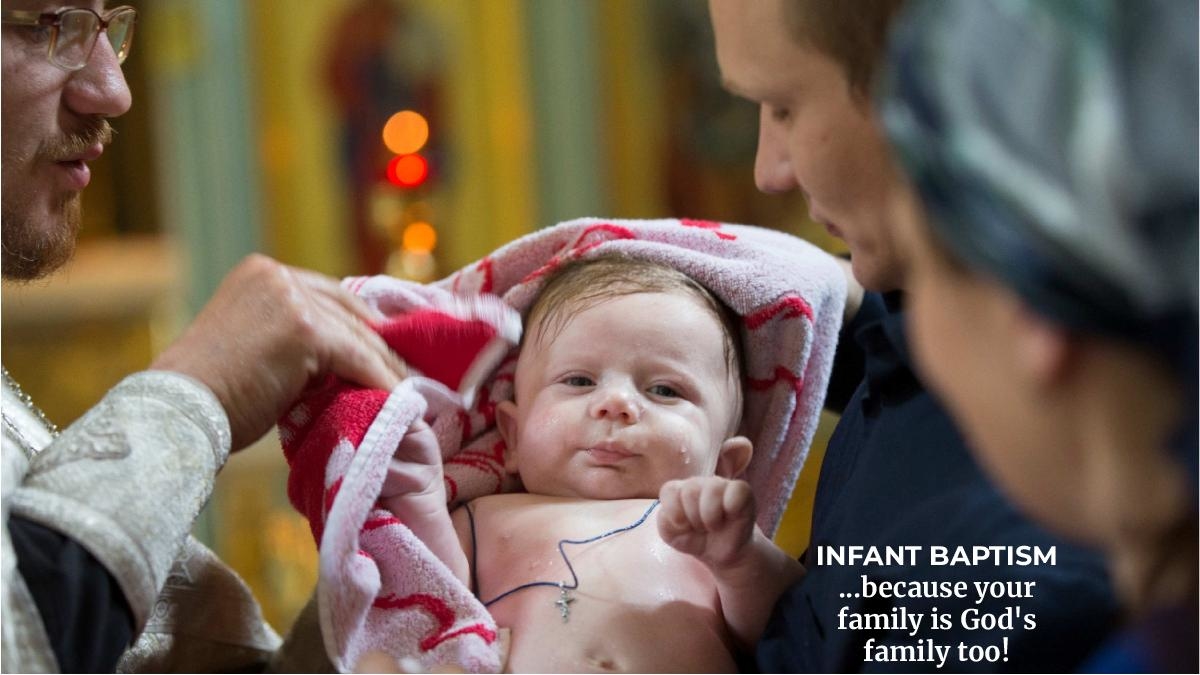
Many denominations of Christians speak out against infant baptism; even among reformed believers like the Puritans and the Reformed Baptist reject the concept of infant baptism but such a concept as theirs of God picking random believers, says that God maintains his covenant on an individual basis rather than being passed down the believer’s posterity as shown in the Bible. For those who argue that an infant has an inability to repent that he may be baptized should know that Abraham circumcised Isaac when he was only 8 days old. Isaac too may have had no realization of what was happening at that time when he was being called into that covenant but the promise was of God and so as repentance too comes from God (2 Timothy 2:25), none can truly say Baptism was their self initiative because Salvation is only of the Lord (Lam 3:26).

As mentioned earlier, Baptism is a symbolic burial of our fleshly and sinful appetites and in turn receiving the life that Adam lost with his disobedience in the garden of Eden.

Col 2
9 For in Him all the fullness of Deity dwells in bodily form,
10 and in Him you have been made complete, and He is the head over all rule and authority;
11 and in Him you were also circumcised with a circumcision made without hands, in the removal of the body of the flesh by the circumcision of Christ;
12 having been buried with Him in baptism, in which you were also raised up with Him through faith in the working of God, who raised Him from the dead.
13 When you were dead in your transgressions and the uncircumcision of your flesh, He made you alive together with Him, having forgiven us all our transgressions,

If you take a look as at Col 2:11-12, you will see that as in the Old Testament, circumcision is what symbolized God ownership over His people. Under the new covenant, His people are marked by the circumcision of the heart where they have died to themselves in Baptism to receive the redemption of Christ, which is newness of life. Heb 9:16 tells us that we as Christians are under a Covenant, established in His blood and though Baptism by immersion is Biblical, we must also consider as Biblical: Baptism by sprinkling. Since the sacrificial sin offering of the Old Testament, was a shadow of the Atonement of Christ; considering that as the blood of the sin offering was sprinkled (Lev 5:9), we can come to the conclusion that Baptism can also be carried out by sprinkling! As per Ex 24:8, it was sprinkling that marked the blood covenant between God and His people.

I would like to leave you the story of Zaccheus, where his repentance unto Christ brought salvation not just to him but also to his house i.e. his family.

Luke 19
2 And there was a man called by the name of Zaccheus; he was a chief tax collector and he was rich.
3 Zaccheus was trying to see who Jesus was, and was unable because of the crowd, for he was small in stature.
4 So he ran on ahead and climbed up into a sycamore tree in order to see Him, for He was about to pass through that way.
5 When Jesus came to the place, He looked up and said to him, “Zaccheus, hurry and come down, for today I must stay at your house.”
6 And he hurried and came down and received Him gladly.
7 When they saw it, they all began to grumble, saying, “He has gone to be the guest of a man who is a sinner.”
8 Zaccheus stopped and said to the Lord, “Behold, Lord, half of my possessions I will give to the poor, and if I have defrauded anyone of anything, I will give back four times as much.”
9 And Jesus said to him, “Today salvation has come to this house, because he, too, is a son of Abraham.

As the Bible says: we are the spiritual descendants of Abraham (Romans 4:16) by having faith in Jesus Christ; and as believers in Jesus Christ salvation comes to us and also to our families whom we head and represent.

humiliation is the real test of HUMILITY!

In finding fruitless reason to deny Christ, many question, how can Almighty God be put through such humiliation as that of the cross. The Bible teaches that there is but one mediator between God and man (1 Timothy 2:5), and so in substance this mediator Jesus Christ was both, fully God and fully man. As God, He becomes Salvation (Ex 15:2) and as a man whom God is pleased with (Romans 8:8) He became subject (Romans 8:7) to God’s perfect Law (Psalms 19:7). It is said in the Bible that Moses was the humblest man of his time (Numbers 12:3) and Moses’ statement has been recorded saying that the One who was to come as Messiah would be like Moses (Deut 8:15). In the Atonement worked out on the cross, the whole deity of Christ is seen for only God is without blemish (Heb 2:10), which is a prime requirement for the regulated sacrificial sin offering; at the same time seeing Jesus who condescended to become man in flesh in the womb of a virgin and taking on the humiliation of the cross, that pointed not only to His humility as a Man of God (Phil 2:8) but also implied that He was the Messiah to come that was spoken off in Moses’ likeness.

The example Jesus has set for a believer, is that one’s obedience to God is prioritized even more than the believer’s sustenance or life; for better is one day to live in obedience to God than to live a thousand days in disobedience (elsewhere) with the wicked.

Psalms 84:10
10 For a day in Your courts is better than a thousand outside. I would rather stand at the threshold of the house of my God Than dwell in the tents of wickedness.

So if you are asking what there is to obey then it is this:

Matthew 22
35 One of them, a lawyer, asked Him a question, testing Him,
36 “Teacher, which is the great commandment in the Law?”
37 And He said to him, ” ‘You shall love the Lord your God with all your heart, and with all your soul, and with all your mind.’
38 “This is the great and foremost commandment.
39 “The second is like it, ‘You shall love your neighbor as yourself.’
40 “On these two commandments depend the whole Law and the Prophets.”

To concluded, I must say however that obedience to the commandments of God is only possible for those who are born of His Spirit (Romans 8:7).

1 Pet 5:6
6 Therefore humble yourselves under the mighty hand of God, that He may exalt you at the proper time,

Christ and the Law

It is considered by many Christians today that believing in Jesus Christ means that you are free from the Law. People like to quote Romans 6:14 and John 1:17 to show that the Law does not apply to believing Christians. They say Christian life is a standard higher than the Law. Well, it must be understood that there are two aspects of the Law i.e. the physical and the spiritual/moral. Now the Bible says that if one keeps the physical aspect and yet transgresses the spiritual aspect of the Law, he still transgresses the Law but he who does not keep the physical aspect of the Law and yet maintains himself in the spiritual aspect of the Law, he keeps the Law.

Romans 2
25 For indeed circumcision is of value if you practice the Law; but if you are a transgressor of the Law, your circumcision has become uncircumcision.
26 So if the uncircumcised man keeps the requirements of the Law, will not his uncircumcision be regarded as circumcision?
27 And he who is physically uncircumcised, if he keeps the Law, will he not judge you who though having the letter of the Law and circumcision are a transgressor of the Law?
28 For he is not a Jew who is one outwardly, nor is circumcision that which is outward in the flesh.
29 But he is a Jew who is one inwardly; and circumcision is that which is of the heart, by the Spirit, not by the letter; and his praise is not from men, but from God.

The Law therefore seen is Spiritual (Romans 7:14) and all hangs on two commandments, it is to first love the Lord your God with all your heart, soul, mind and strength and secondly to love your neighbor (even it is your enemy) as you love yourself (Luke 10:27). It must be understood that the law that came to a close in Romans 10:4 was the law, the physical aspect which people used to establish their own self righteousness. Gal 3:24 says that it is the Law that leads us to Christ because the Law makes people realize the dreadfulness of sin (Romans 7:7) and convicts them (James 2:9) that they may be brought to repentance… back to Christ. As His Church is the believing body that is susceptible to sin, the reason a Christian has been brought to the terms of facing his sin, is because the Law is written on his heart (Romans 2:15) and so he keeps the Law and is judged by the Law (Romans 2:12) but his faith in Christ has made the curse of the Law fall on Him who was the atonement sacrifice of all the sin of His people (Gal 3:10, 13).

There was a time I felt that the grace by which I was saved was grace that gave me freedom from the Law but I have now come to realize that that is certainly not the case. In fact it is by His moral Law (Romans 6:16-18) which has been imputed in me by His Spirit that I realize that the grace I have received is not one that gives me freedom to sin (Romans 6:15). The Law is perfect (Psalms 19:7), nothing which is perfect can get any better. If I am called to love my neighbor as I love myself, then I am automatically called to never covet, steal or murder against my neighbor. The way I had come to receive the grace of Christ, was a way that was lawless, a blasphemy against Christ Himself. This I have seen as my sin, for in loving Christ, I am called to obey His commandments.

John 15:10 (Jesus’ word)
10 If you keep My commandments, you will abide in My love; just as I have kept My Father’s commandments and abide in His love.

Now here is an interesting thought in John 15:10, as per reformed theological study Jesus Christ is referred to as the Second Adam. You see both Adam and Christ were subject to the commandments of God. Adam was created perfect (un-fallen) while Christ did not inherit original sin as He was conceived by the Holy Spirit in the womb of a virgin. Both Adam and Christ were representatives of a people, while Adam represented all mankind, Christ represented the Church. Both were subject to the Covenant of Life i.e. the Salvation of the people they represented that depended on their works in obedience to God. It must be seen that this testing was only for a certain period of time; else the term ‘eternal life’ would not have existed. It was a famous theologian who said: In Christ, the sons of Adam boast of more blessing than their father lost. So if any racial distinctions are ever to be drawn, it is those who were represented by Christ who are superior and this is grace that he who is saved is saved by the merit of Christ and not himself. For by himself, his fallen nature is inherent from Adam.

The Bible does say that man is not justified by the Law and even where there is no Law, people perish (Romans 2:12). It is right that man is justified by faith in Christ but the grace that we receive in Christ extends to receiving the Holy Spirit, who fulfills in us the requirements of the Law (Romans 8:4). Though it says in 1Cor 15:56 that the power of sin is in the law it should never be considered that the Law is Sin (Romans 7:7) for a person comes to terms with the power of sin through the Law (Spiritual) besides 1John 3:4 refers to sin as lawlessness.

Matthew 5:18 (Jesus’ word)
18 “For truly I say to you, until heaven and earth pass away, not the smallest letter or stroke shall pass from the Law until all is accomplished.

Atonement was accomplished on the cross (John 19:30), while the Salvation of the Church is being accomplished in the furnace of trial and affliction, suffering for Christ sake (Phil 1:29) by believers all over the world (1Peter 5:9). On the other hand the sin playing out of a person’s lust accomplishes death (James 1:15) for the reprobate as it incurs the wrath of God (Jeremiah 30:23-24). So we see that His Law shall remain till His Salvation is accomplished for every elect and His wrath accomplished for every deemed reprobate.

There are many religions and cultures around the world who claims to adhere to strict regulations but when you step out into their streets and public places, their nature of rebellion against the spiritual Law of God sticks out like a sore thumb but these will surely receive His justice and even those whose acknowledgement of His Lordship is nothing more than lip service (Mat 15:8) and outward displays these will also be deemed under the same lawlessness.

Matthew 7
15 “Beware of the false prophets, who come to you in sheep’s clothing, but inwardly are ravenous wolves.
16 “You will know them by their fruits. Grapes are not gathered from thorn bushes nor figs from thistles, are they?
17 “So every good tree bears good fruit, but the bad tree bears bad fruit.
18 “A good tree cannot produce bad fruit, nor can a bad tree produce good fruit.
19 “Every tree that does not bear good fruit is cut down and thrown into the fire.
20 “So then, you will know them by their fruits.
21 “Not everyone who says to Me, ‘Lord, Lord,’ will enter the kingdom of heaven, but he who does the will of My Father who is in heaven will enter.
22 “Many will say to Me on that day, ‘Lord, Lord, did we not prophesy in Your name, and in Your name cast out demons, and in Your name perform many miracles?’
23 “And then I will declare to them, ‘I never knew you; depart from Me, you who practice lawlessness.’